
Chester County City Directory Collections
Chester County is not served by one proven annual city-directory run. The strongest record is a shelf of separate county, borough, business, farmers, and town titles. The Chester County History Center, known as CCHC, recommends using its PastPerfect catalog and collection guides to identify a title before a research visit. That keeps a search tied to an actual volume instead of turning one confirmed date into a claim of continuous coverage. The table separates verified directory nodes from census, newspaper, map, and deed collections that help test an entry.
| Collection | Years | Where held | Access |
|---|---|---|---|
| Boyd's Chester County Directory | 1884-85 | Institutional genealogy catalogs | Locate a title-specific local or FamilySearch copy |
| Boyd Chester County Business & Farmers | 1886-87 | Institutional directory catalogs | Inspect the listed volume |
| Chester County directory | 1896-97 | Institutional directory reference | Verify publisher and entry details in the volume |
| West Chester directory | 1932-33 | CCHC archival collection guide | Catalog or counter confirmation |
| West Chester directory item | 1953-64 grouping | CCHC Borough Archives finding aid | Exact volume year needs confirmation |
| Federal census microfilm | Chester County 1790-1930 | CCHC Library | In-person historical household research |
| Septennial census returns | 1793-1863 | County Archives | Indexes, digital material, or research room |
Boyd's 1884-85 title describes West Chester, Phoenixville, Coatesville, Oxford, county towns and villages, plus a farmers list. The 1886-87 Boyd title emphasizes business and farm context. Those scopes matter. A surname missing from a West Chester title might appear in a county or farm directory, or may fall outside that title's canvass. Note: A verified directory date proves a usable snapshot, not that every year before or after it was published.
Chester County City Directory Scope
Read the place named on the title page before treating an individual directory as countywide. Chester County has 73 municipalities, and a West Chester publication may not reach a township, a village, or another borough. The same caution applies to rural addresses. A person connected to a farm or an unnumbered road may be more likely to appear in a county, business, or farmers title than in a city volume. Keep the title, publisher, year, page, column, and stated geographic coverage with every note.
The confirmed sequence has useful gaps as well as useful dates. It begins with two Boyd county directories, includes an 1896-97 county title, then has confirmed West Chester evidence for 1932-33 and a 1953-64 published-records grouping. The gaps are evidence that a catalog search and a volume inspection come first. They are not evidence that a household vanished.
- 1884-85: Boyd's county directory records a broad county-town and farmers context.
- 1886-87: Boyd's business and farmers title provides another dated county snapshot.
- 1896-97: A Chester County directory is confirmed, with entry-level details left for the volume.
- 1932-33: A CCHC collection guide cites a West Chester directory.
- 1953-64: A Borough Archives finding aid identifies a West Chester directory item within this grouping.
CCHC Historical Volume Research
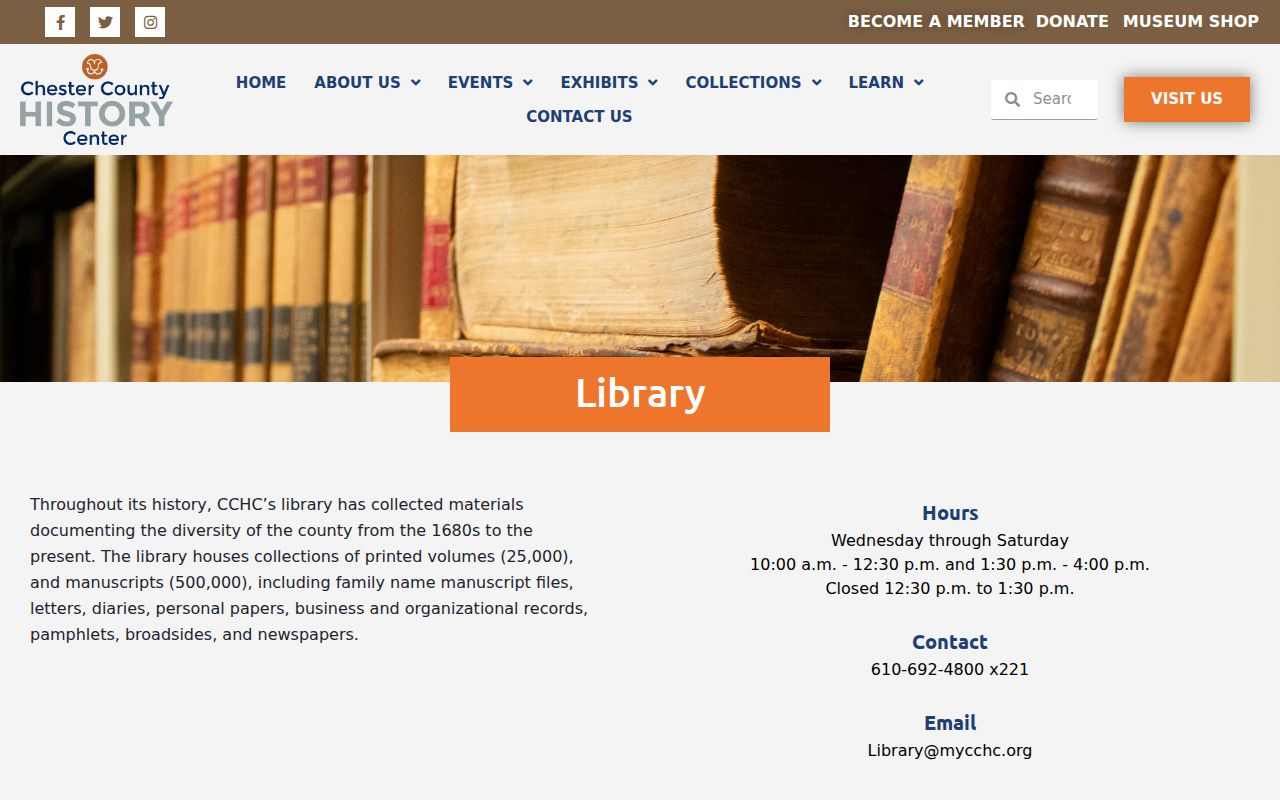
The Chester County History Center Library is the practical starting room for Chester County historical directories and related material. Its holdings include about 25,000 printed volumes and 500,000 manuscripts from the 1680s onward, including family files, personal papers, organizational records, maps, census material, burial and marriage records, and genealogies. Search PastPerfect by municipality, surname, street, directory title, church, school, or organization before going. That search can narrow a visit to a shelf, film run, or finding aid.
The library is open Wednesday through Saturday from 10:00 a.m. to 12:30 p.m. and 1:30 to 4:00 p.m. Its research phone is 610-692-4800 x221. Visitors may make fair-use copies or personal images, with published copying rates that vary by paper size and color. CCHC's library collection page is the source represented here.
West Chester Public Library is a general-library fallback for local context and directs county genealogists to CCHC and County Archives for specialized research. Its system resources include POWER Library indexes and a photo archive. Historical directories should remain dated evidence, even when a library finding aid makes a title easy to locate.
Its catalog-first approach helps separate a real Chester County volume from a lead that only sounds local. Bring the exact title and desired year to the desk, then ask whether the volume has an alphabetical section, a street section, or supporting microfilm.
Reading a Chester County City Directory
Open a local volume as a particular publisher's record, not as a standardized form. The local research did not produce a digitized entry page that proves every volume uses the same abbreviations or fields. A 1932-33 West Chester reference did show that a directory could identify a resident's organizational roles. For any volume, transcribe the printed wording and photograph its abbreviation key before interpreting a mark.
| Printed name | Copy spelling exactly, including initials and any widow or spouse notation. |
|---|---|
| Address and place | Record the street, number if shown, town or borough, page, and column. |
| Occupation or organization | Preserve the stated role and named organization as a dated identity lead. |
| Business address | Keep it separate from a residence line, if the volume prints both. |
| Title evidence | Capture directory year, full title, publisher, and the individual volume's abbreviation key. |
- Criss-cross directory
- A directory section arranged by street and address rather than by surname. Do not assume one exists until the opened volume's contents show it.
- Householder index
- An index that may list a household or address entry. Its coverage and labels depend on the publisher.
- Abbreviation key
- The publisher's own explanation of shortened terms, usually near the beginning or end of the volume. It is safer than assigning a universal meaning to a letter.
An absence can mean a spelling variation, a rural place outside the title, a non-canvassed person, another town edition, or an omitted household. It cannot by itself establish a move or death. A modern fact found later should be verified through the appropriate custodian; the Chester County resident lookup route is designed for that separate task.
CCHC's Local Newspaper Bridge
Directory research grows stronger when it is paired with the CCHC clipping file. The collection spans 1810-1970, draws from more than 40 Chester County newspapers, and occupies more than 150 file drawers. Alphabetical family-surname clippings include obituaries and birth or marriage notices. The Library also holds lengthy place-specific runs, including the Daily Local News for West Chester from 1872 to the present, the Coatesville Record for 1908-1993, the Downingtown Archive for 1877-1974, the Oxford Press for 1866-1977, and the Village Record for 1818-1916.
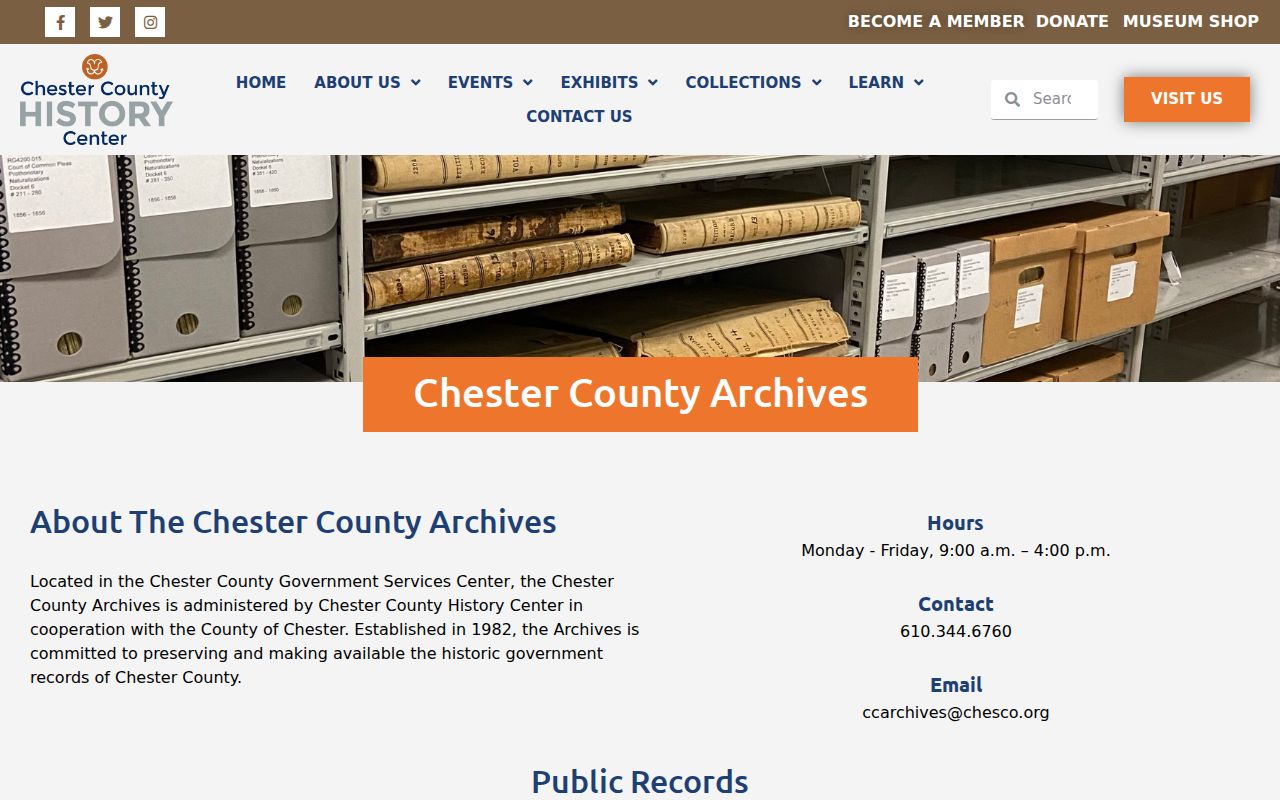
The History Center archives collection describes the archival partnership and its public research scope.
Use a directory address and year to narrow a newspaper search by place and time. A notice can support an address change or family connection, but it still needs identity matching before it is attached to the right person.
Chester County Directory Gaps
No inspected CCHC source confirms an exhaustive shelf list or a continuous local reverse-directory run. A street or reverse section must be confirmed from the table of contents of each physical or digitized title. This limitation matters when tracing a rural road, a historical village, or a borough with its own publication pattern. A county or farmers volume may be the better fit, while some addresses will only be visible through maps, tax material, deeds, or census records.
Do not manufacture a bridge between an old street number and a modern address. Chester County sources do not document a countywide renumbering year or a single county street grid. A dated map, plat, municipal ordinance, or directory comparison must support any claimed change. Note: Preserve the municipality with the address because permits, zoning, occupancy, and code records belong to the municipality where the parcel sits.
Maps Beside Chester County Directories
Historic maps help test a directory address that predates a modern numbering system. CCHC reports that the Witmer 1873 and Breou 1883 atlases cover all townships and often identify property owners. Railroad atlases reach most county areas in the 1890s through the 1930s. For a rural property, pair the map owner label and historical road with the deed's legal description. A current street number alone is a weak bridge across time.
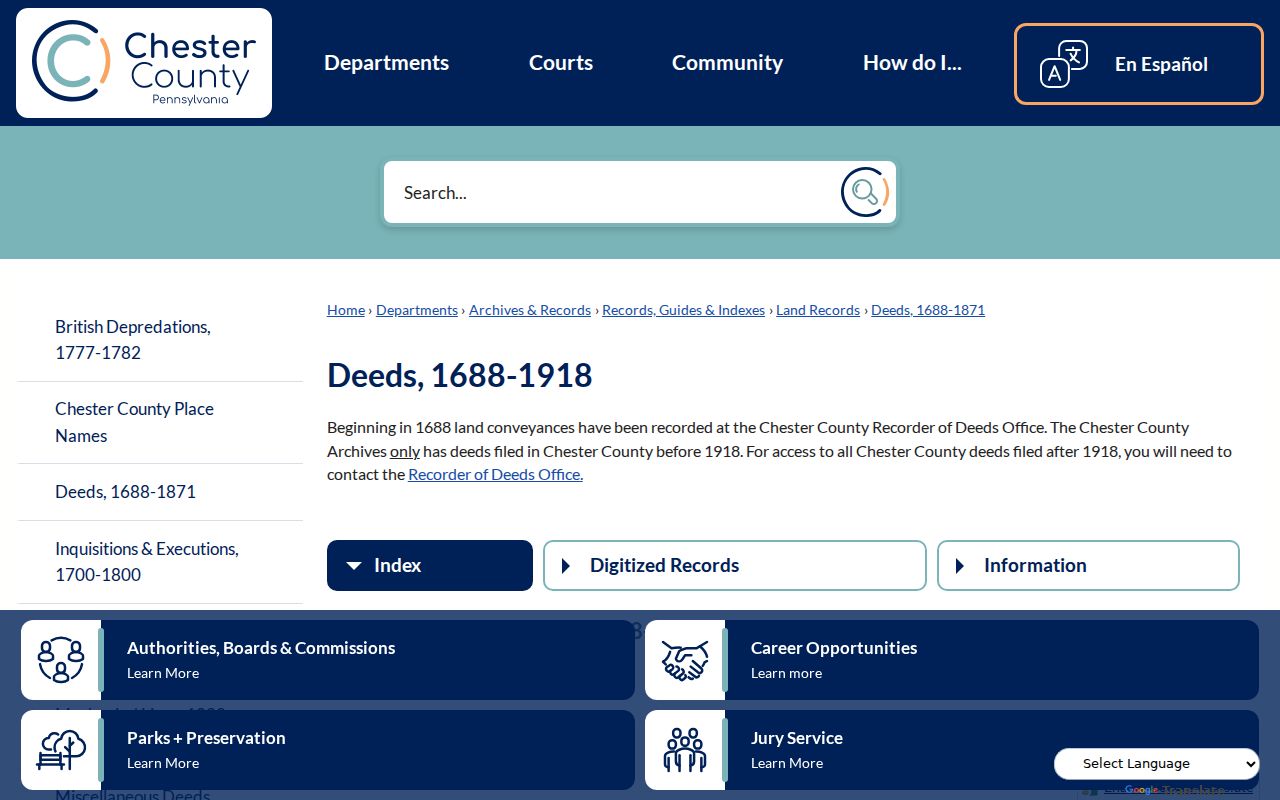
The County Archives early deeds collection provides a second local check through its grantor/grantee index and digitized deed books.
A recorded deed can confirm party roles and a legal description, but early recording dates can lag the transaction by years or decades. Some Chester County residents also recorded conveyances in Philadelphia. Treat a directory entry, map label, and deed as separate dated pieces of evidence.
Tracing Chester County City Directories
Family history becomes more reliable when each entry is kept as a dated observation. Start from the most precise known address, municipality, and approximate event. Rural places may need the 1873 or 1883 owner atlases, or later railroad atlases, before a directory title is chosen. Then track spelling, spouse notation, organization, and address changes as separate facts rather than silently joining people with the same name.
- Search the catalog for a directory title that matches the municipality and period.
- Transcribe the name, address, year, publisher, page, and column from the opened volume.
- Check its contents for an alphabetical or street-order section before relying on either one.
- Compare the directory year with the nearest federal census or Chester County septennial census, using the census's stated enumeration date.
- For an owner connection, compare parcel history and the Recorder deed chain; for another household member, test local newspapers, school, church, organizational files, and census evidence.
- Use an obituary, probate, coroner, or proof-of-death record as an endpoint lead, not as a replacement for identity matching.
CCHC holds Chester County federal census film for 1790-1930, while County Archives maintains Pennsylvania septennial returns for 1793-1863. Those locally timed records can fill spaces between directory dates. The right result is a documented household history, not a claim that one directory proves continuous residence.
Chester County Archive Endpoints
When a household disappears from a directory, County Archives and CCHC offer historical endpoint material. County Archives is at 601 Westtown Road in West Chester, open Monday through Friday from 9:00 a.m. to 4:00 p.m., with research help at 610-344-6760. It has a naturalizations index for 1798-1906 and historical probate, tax, census, marriage, and death alternatives. CCHC adds family files, burial material, portraits, church and cemetery guides, and newspapers. These collections establish historical context and dates, not current contact information.
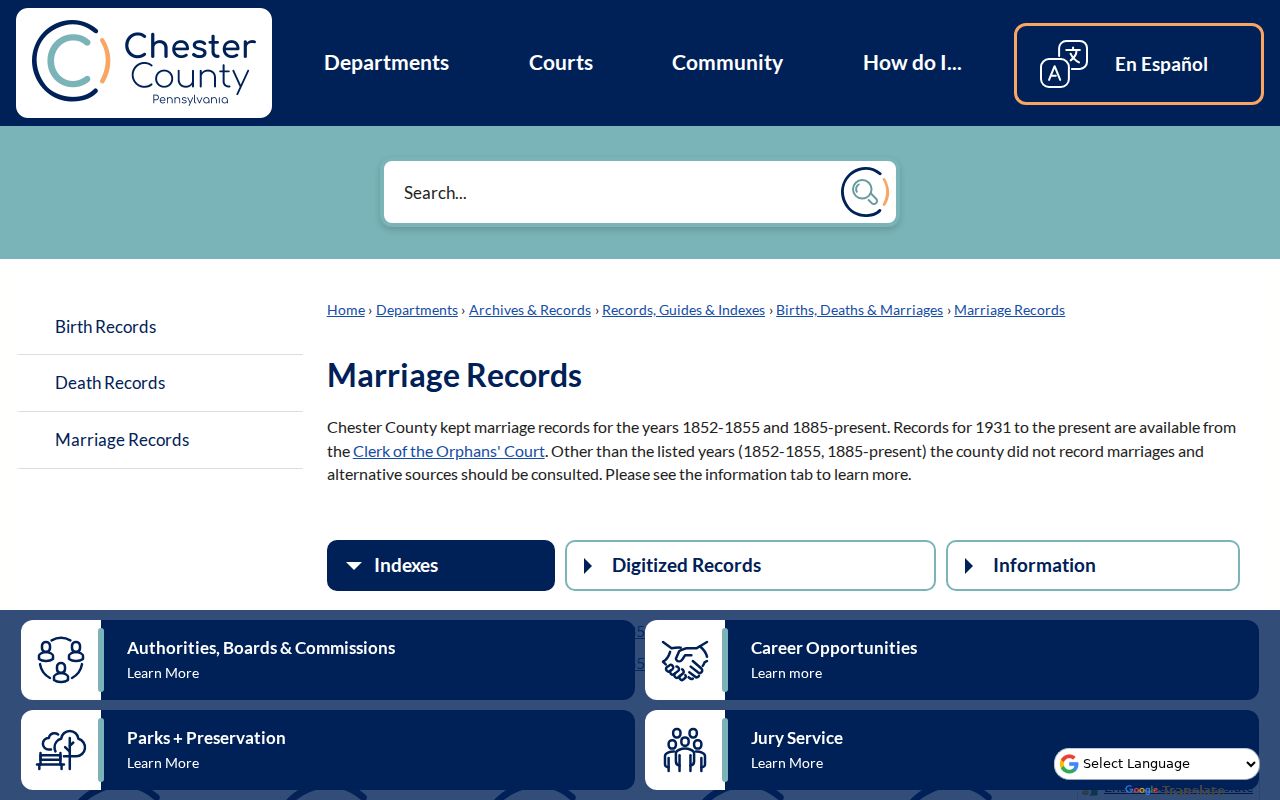
County Archives marriage-record guidance is one example of the historical records held outside a directory shelf.
Use the title, year, page, municipality, and a second source to preserve a careful Chester County historical trail. That level of detail makes later review possible when names repeat or boundaries change.